
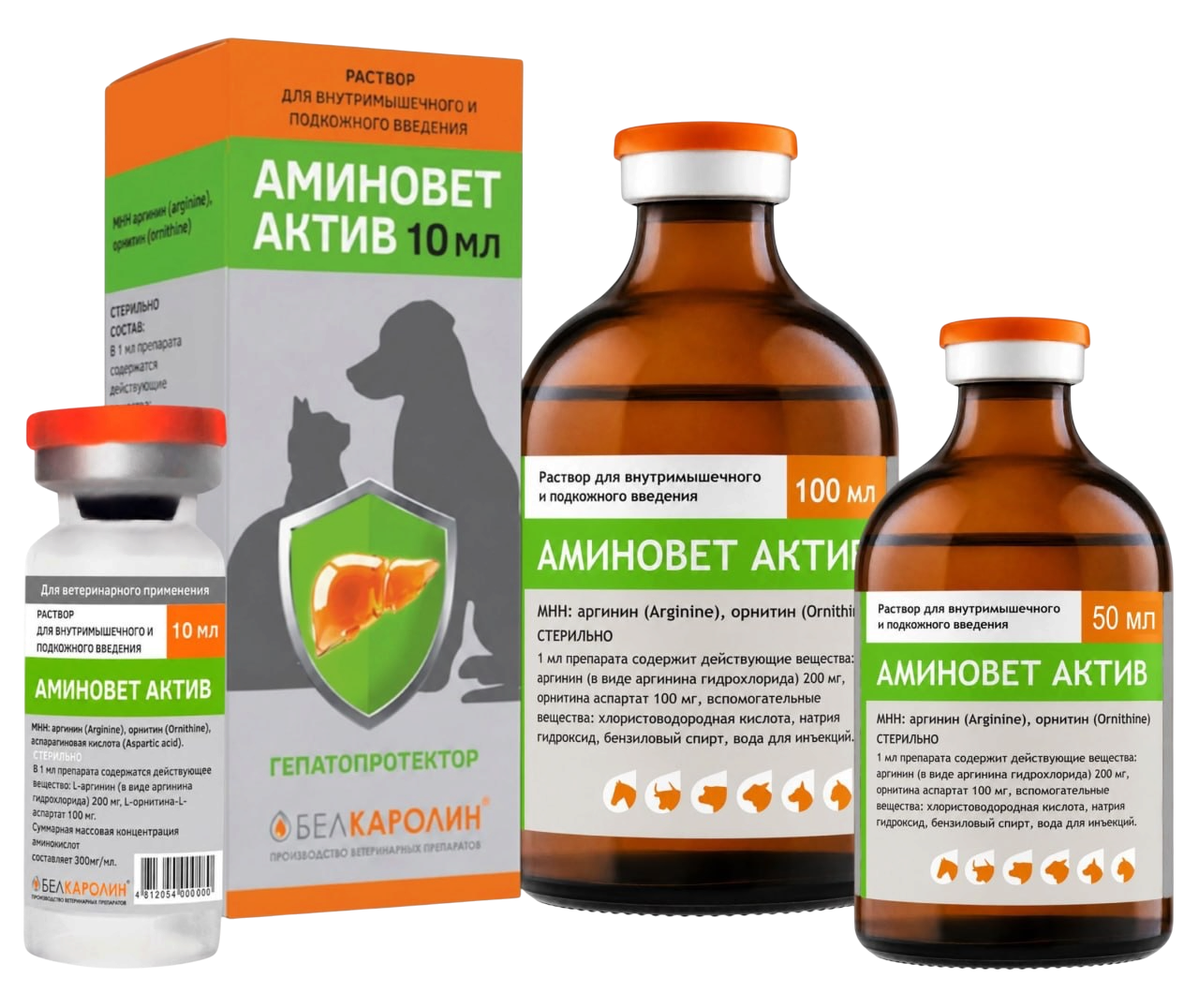
Aminovet Active
- Pharmacological group: Hepatoprotector
- Active ingredients: L-arginine, L-ornithine-L-aspartate
- Dosage form: Colored glass bottles of 50 and 100 ml. Colorless glass bottles of 10 ml.
- Promotes the neutralization and removal of ammonia
- Has an immunostimulating effect
- Reduces the hepatotoxic effects of veterinary drugs
International nonproprietary name.
Arginine, ornithine.
Solution for intramuscular and subcutaneous administration.
Description. Transparent liquid, colorless to light yellow, free of foreign matter.
Shelf life. Shelf life is two (2) years from the date of manufacture, provided transportation and storage conditions are met. Do not use after the expiration date.
Storage conditions:Transport and store the drug in a dark place at a temperature of 2°C to 25°C.
After first opening the bottle, store the drug for no more than 28 days. Do not use after the expiration date.
Keep out of reach of children!
1 ml of the drug contains the active ingredients: arginine 200 mg, ornithine aspartate 100 mg and excipients.
Arginine is a conditionally essential amino acid. It stimulates cellular metabolism, promotes the detoxification and removal of ammonia from the body in the ornithine cycle of urea synthesis, regulates blood sugar levels, reduces lactic acidosis caused by muscle exertion, activates the antioxidant enzyme system that synthesizes the nitroso group (NO), exerting a vasodilatory effect, and has a positive effect on blood clotting and the functional properties of circulating red blood cells.
Ornithine – A non-proteinogenic amino acid, involved in the ornithine cycle, reduces ammonia levels in the body (ornithine is an activator of both enzymes (ornithine carbamoyltransferase and carbamoyl phosphate synthetase) in the substrates of urea synthesis, participates in the synthesis of citrulline, proline, glutamic acid, niacin, polyamines puprescin, spermidine and spermine, stimulates the secretion of insulin and somatotropic hormone, has an immunostimulatory effect.
Aspartic acid is a replaceable amino acid that plays an important role in the metabolism of nitrogenous substances (ammonia metabolism, the synthesis of purine and pyrimidine bases, carnosine and creatine, in transamination reactions (as part of the tricarboxylic acid cycle) and reactions of the urea cycle) and some amino acids (alanine, asparagine, Methionine, threonine, isoleucine, serine, etc.). Stimulates oxidation-reduction processes and activates metabolism. Enhances regenerative processes after excessive physical exertion.
It is prohibited to use the drug in animals with hypersensitivity to the components of the drug.
Missing a dose of the drug should be avoided, as this may reduce its therapeutic efficacy. If a dose is missed, resume administration at the same dosage and according to the same schedule.
When using the drug during pregnancy and breastfeeding, the potential benefit to the mother must be weighed against the potential risk to the fetus and offspring.
The drug is used for therapeutic and prophylactic purposes in cattle, sheep, pigs, horses, dogs and cats for liver diseases of various etiologies (including hepatitis, fatty and toxic dystrophy), intoxications of various etiologies, in metabolic disorders (ketosis, postpartum toxemia of ewes and sows), in the complex therapy of ammonia intoxication (during the rehabilitation period after illnesses, to reduce the hepatotoxic effect of veterinary drugs.
- Cattle: Subcutaneous, intramuscular, 10-20 ml/animal;
- Horses: Subcutaneous or intramuscular, 10-20 ml/animal;
- Calves: Subcutaneous, intramuscular, 2-4 ml/animal;
- Sheep and goats: Subcutaneous or intramuscular, 2-4 ml/animal;
- Pigs: Intramuscular, 2-4 ml/animal;
- Piglets and lambs: Subcutaneous or intramuscular, 1-2 ml/animal;
- Dogs and cats: Subcutaneous, intramuscular, 0.5-2 ml/animal.
The drug is administered 1-2 times a day for 4-7 consecutive days.


